Skip to content

Geomechanics

Coupled Geomechanical & Reservoir Modelling

Predict rock deformation, fracturing risk and reservoir performance with Geomechanics — fully coupled with tNavigator’s simulation and modelling suite

Predict Rock Deformation and Reduce Fracturing Risk

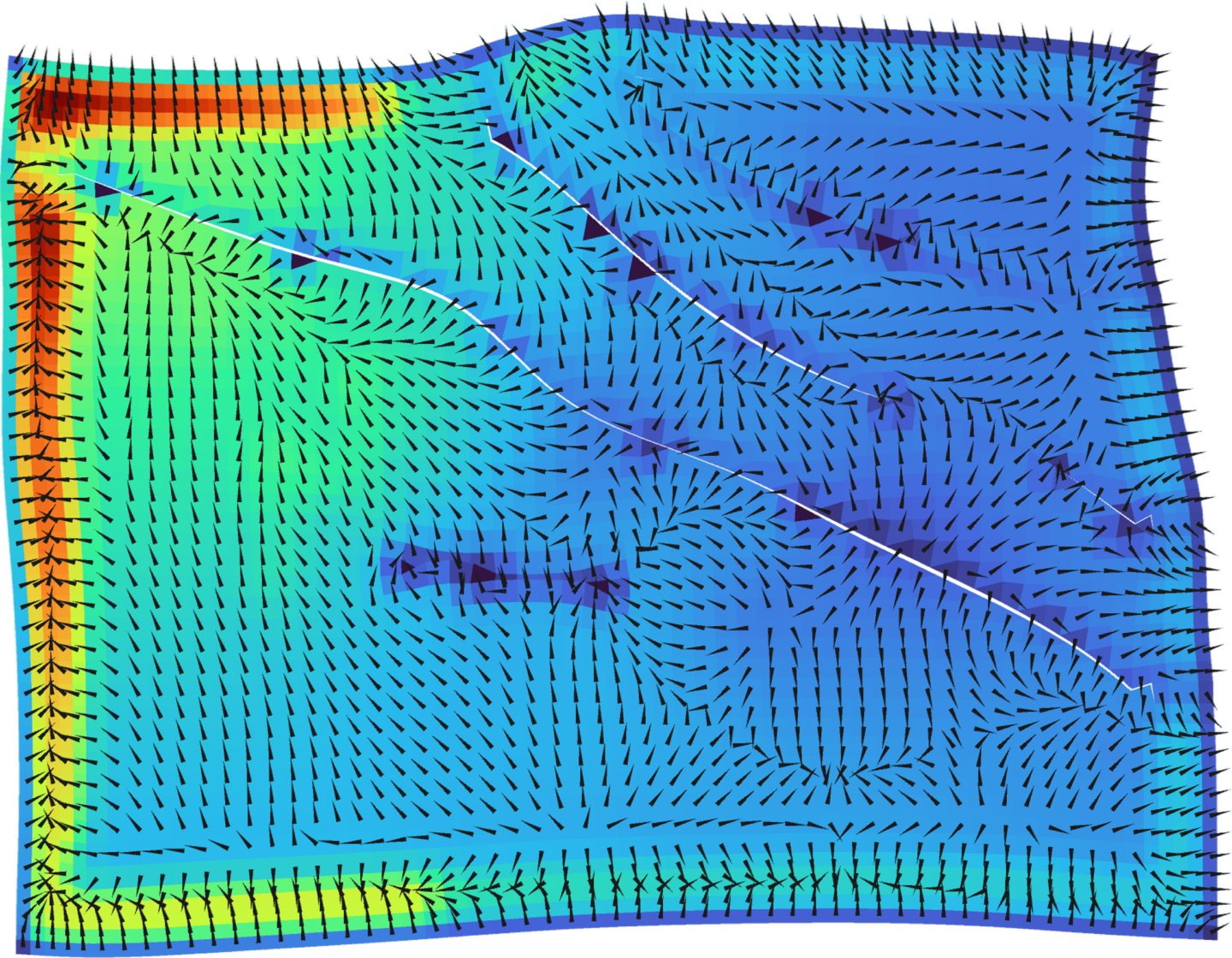
tNavigator’s Geomechanics module ensures safe, efficient reservoir management by predicting rock deformation, optimal operating conditions and potential fracturing risk. By solving coupled geomechanical and fluid-flow equations on a single grid, it forecasts irreversible deformation, fracturing direction and any deterioration in flow capacity – protecting infrastructure and preserving reservoir performance.

A Fully Coupled Geomechanical and Filtration Model

Geomechanics performs integrated simulations on a single computational grid, using fully implicit numerical methods and industry-standard rock failure criteria. This lets teams forecast deformation and fracturing behaviour before it happens, rather than reacting to it afterwards.


Fully Coupled Modelling

Integrate filtration and geomechanical simulations to predict reservoir behaviour under changing stress conditions, rather than modelling each in isolation.

Multiple Rock Failure Criteria

Choose from a comprehensive library of failure and plasticity models – including Mohr-Coulomb, Hoek-Brown and Cam-Clay – to match the criterion best suited to your rock type and setting.

Optimised Operating Conditions

Identify safe operating pressures and prevention strategies to avoid infrastructure damage, preserving both reservoir integrity and long-term performance.
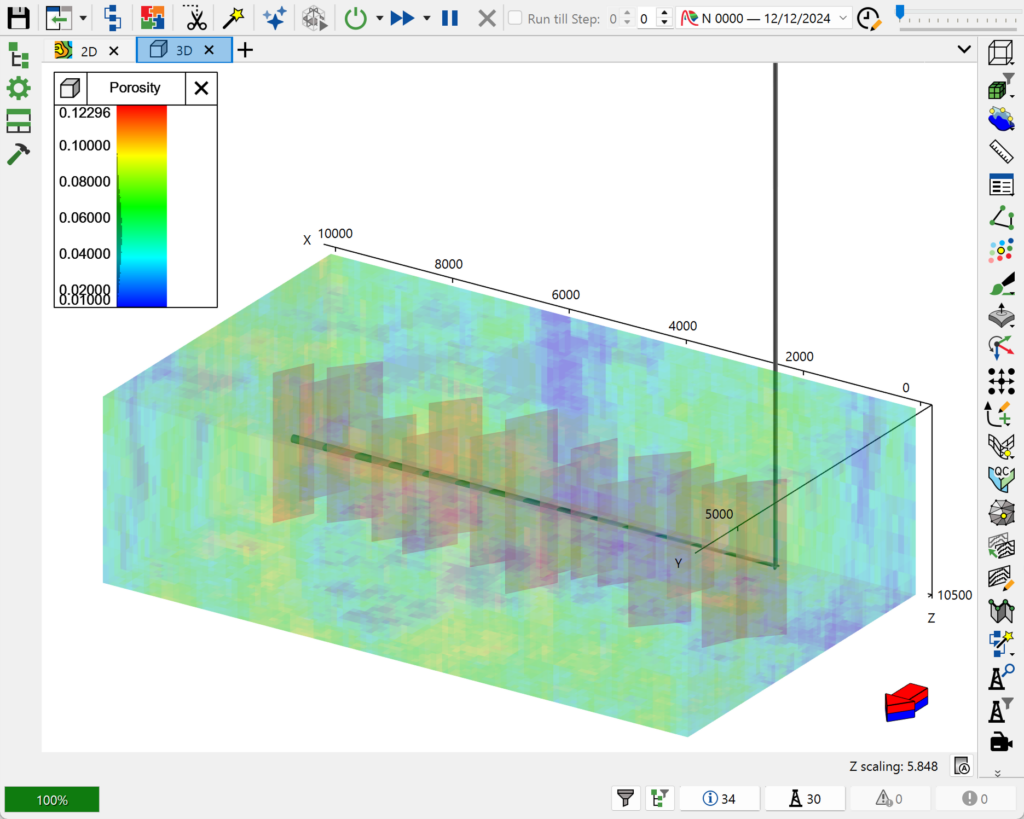

Geomechanics supports a full range of geomechanical workflows, for both oil and gas fields and mining operations: 

  • 1D geomechanical modelling – analyse well logs, core, drilling and well-testing data to build elastic-strength property and stress models, and assess wellbore stability during drilling.
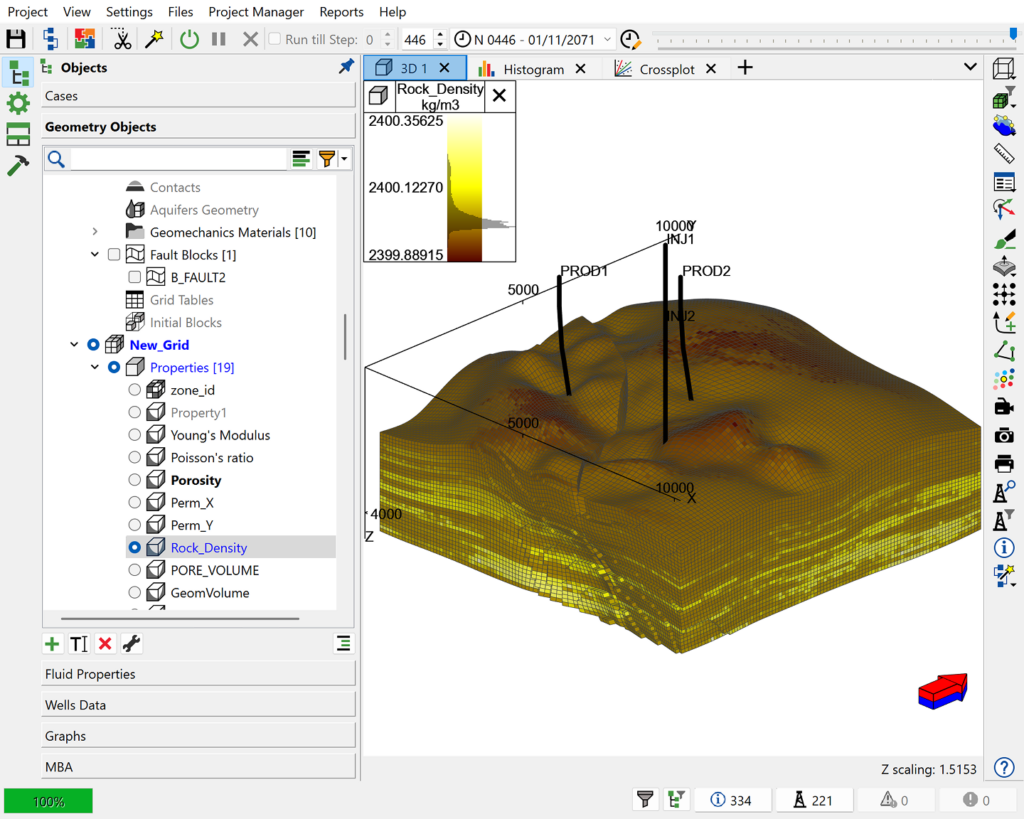
  • 3D static geomechanical model preparation – build grids and interpolate elastic-strength properties and stress indicators across the reservoir.
  • Finite element modelling – model elastic, plastic and viscoplastic rock behaviour using criteria including Mohr-Coulomb, Hoek-Brown, Cam-Clay, Tresca, Drucker-Prager and von Mises.
  • Rock failure & fracturing prediction – apply multiple failure criteria to identify fracture direction and structural risk.
  • 4D fully coupled modelling – solve fluid-flow and geomechanical equations together at every simulator timestep.
  • Parallel CPU/GPU solution – run geomechanics on CPU cores and reservoir flow on CPU and GPU cores in parallel, for faster coupled calculations.
  • Fault and risk management – model fault normal and shear stiffness and set optimal operating pressures to avoid infrastructure damage.

Geomechanics is fully integrated within the tNavigator platform:

  • Build on grids and interpolated properties from Geology Designer and Mining Designer.
  • Run coupled with Black Oil, Compositional and Thermal simulation to capture the impact of fluid flow and thermal fields on rock stress.
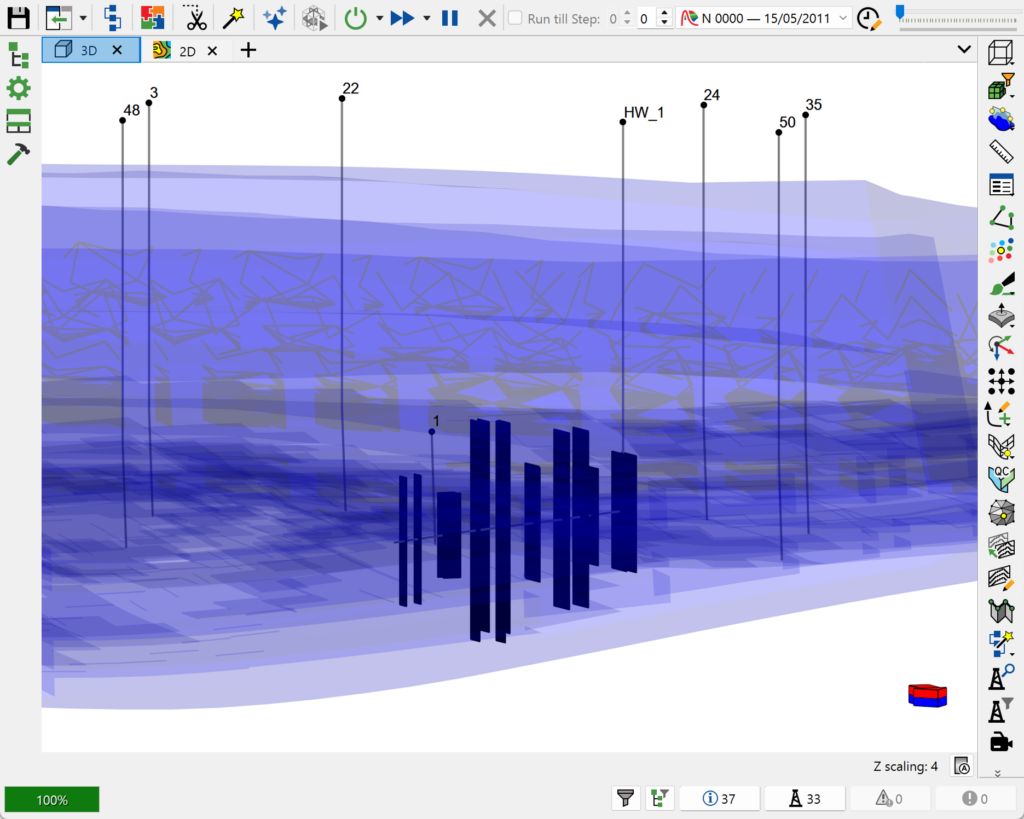
  • Feed directly into Fracture Simulator as the geomechanical basis for hydraulic fracture design.

A single geomechanical engine for oil and gas fields, open-pit mines and underground workings alike.
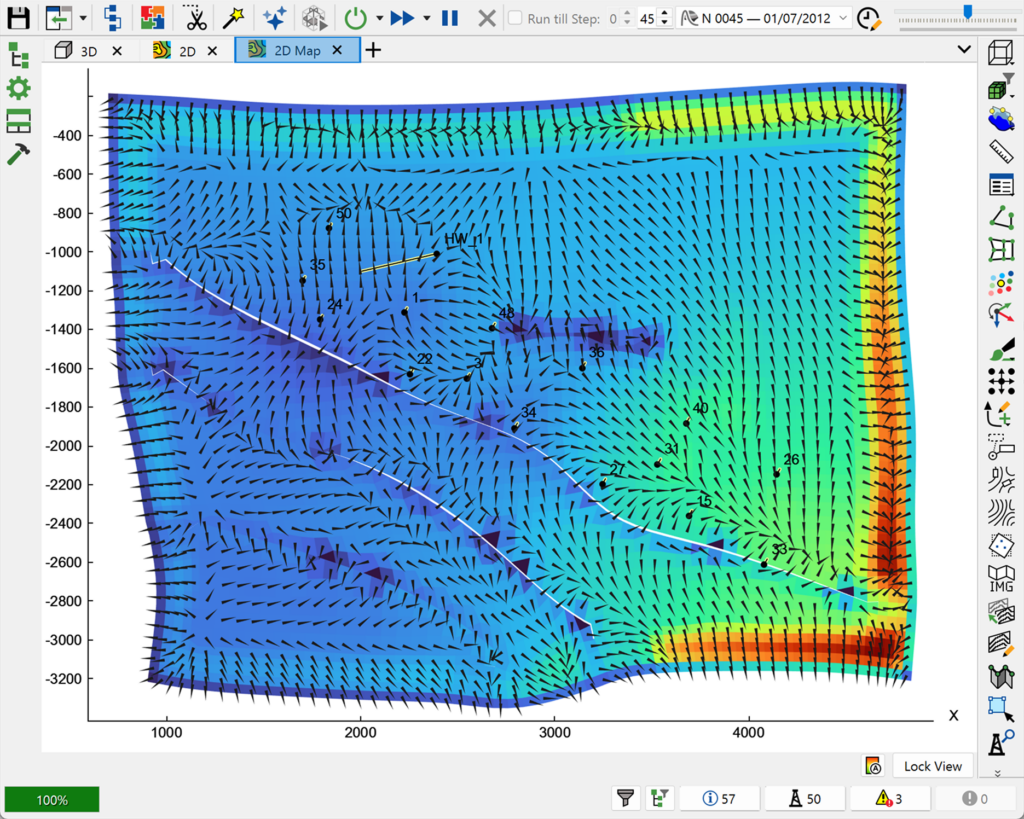
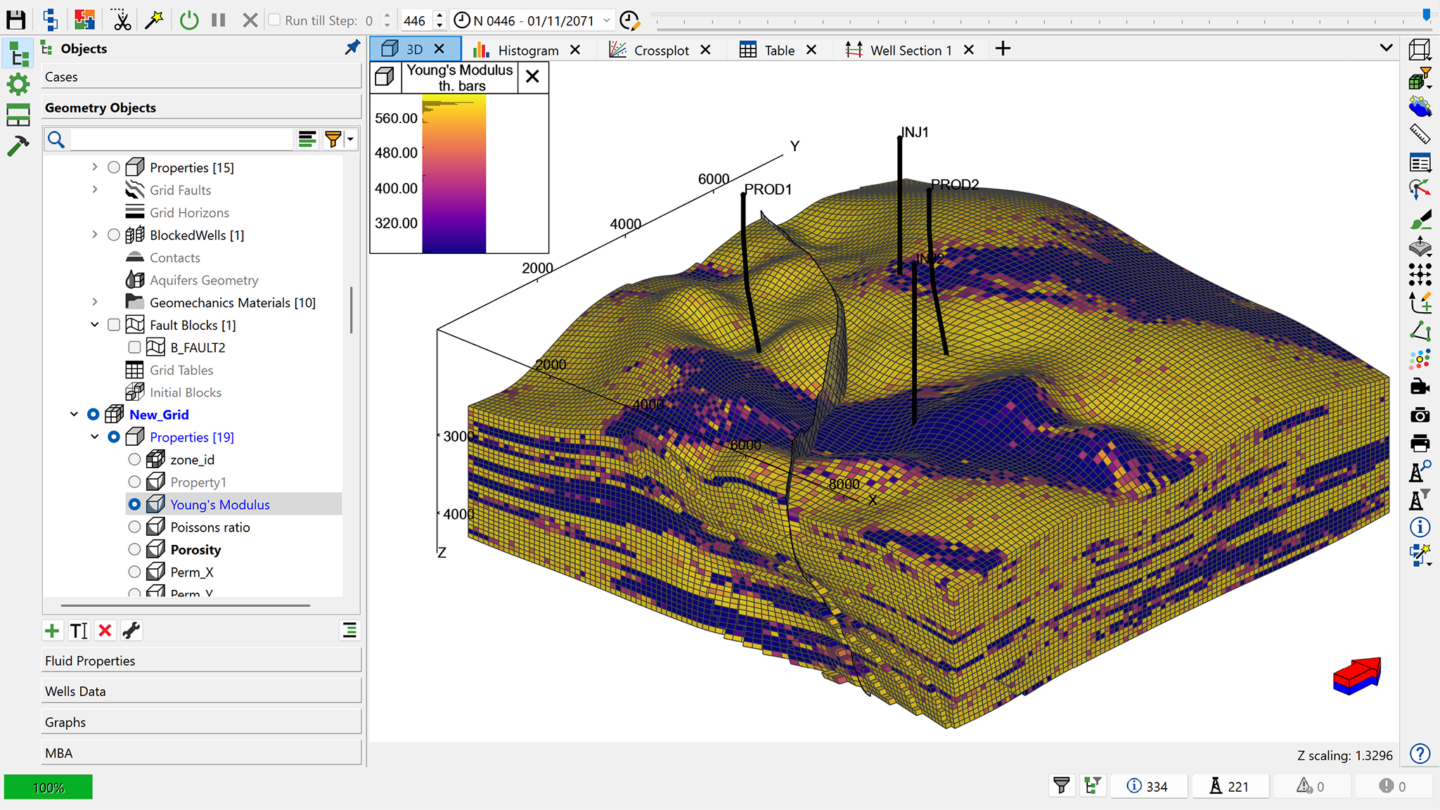
Common Use Cases:

  • Wellbore stability analysis and trajectory optimisation during drilling
  • Predicting sand production risk
  • Reservoir compaction and surface subsidence assessment
  • Fault reactivation and induced seismicity risk management
  • Hydraulic fracture design inputs
  • Mine working stability analysis